Modern commercial buildings are designed to impress. Striking architecture, expansive glazing, and innovative materials help buildings stand out in competitive urban environments. However, while these features enhance appearance and value, they often introduce significant challenges when it comes to safe access for maintenance — particularly high-level window cleaning.
For property managers and managing agents, access is no longer a simple operational consideration. It is a critical safety, compliance, and cost-control issue. Understanding the most common access challenges on modern buildings is the first step toward managing them effectively.
1. Increased Building Height and Complexity
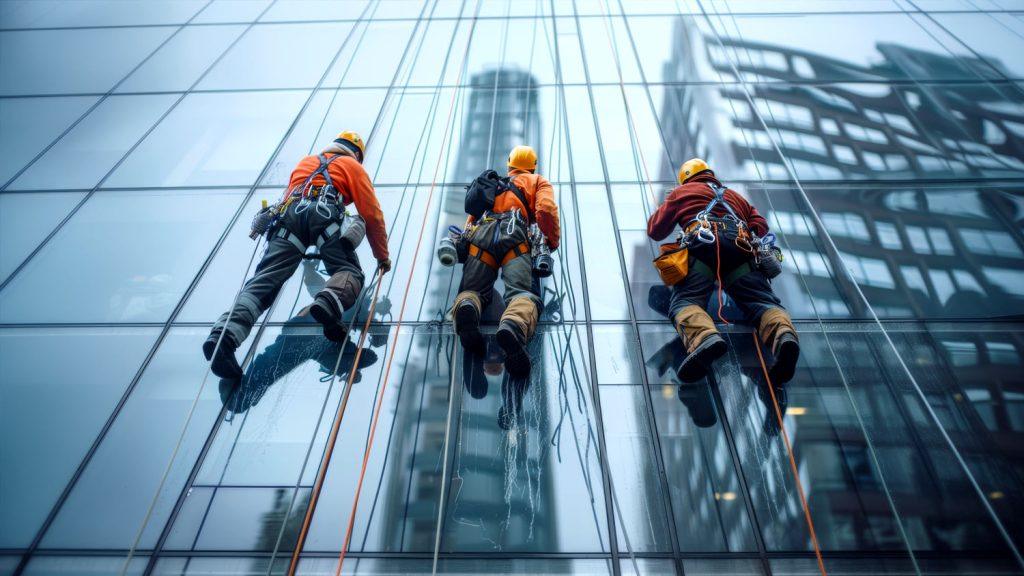
One of the most obvious challenges is height. Commercial buildings are taller than ever, with multi-storey façades, atriums, and glazed elevations becoming standard design features.
As height increases, so does risk. Traditional access methods such as ladders or basic mobile equipment quickly become unsuitable. In many cases, scaffold erection is impractical, costly, or disruptive, particularly in busy commercial or mixed-use environments.
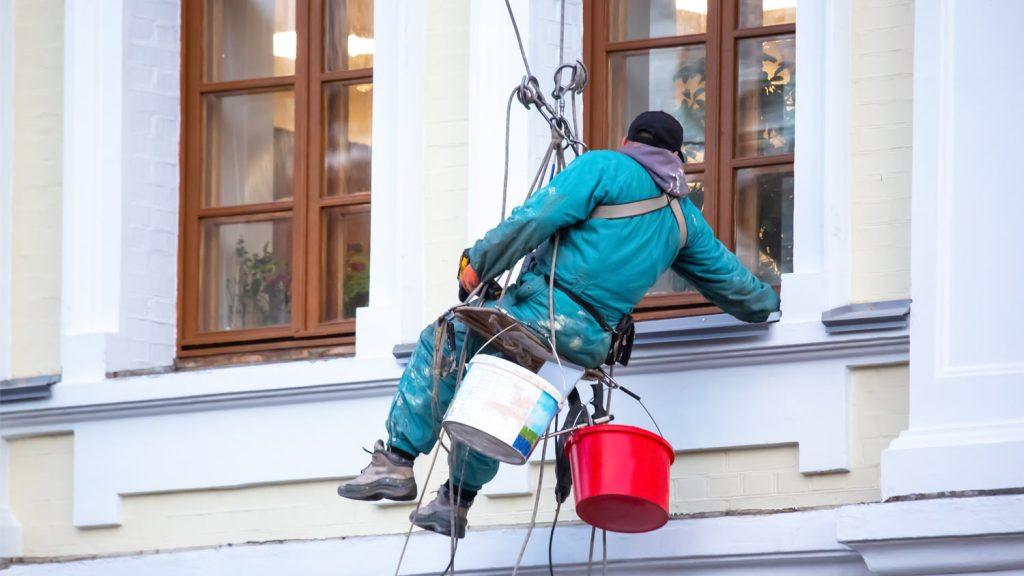
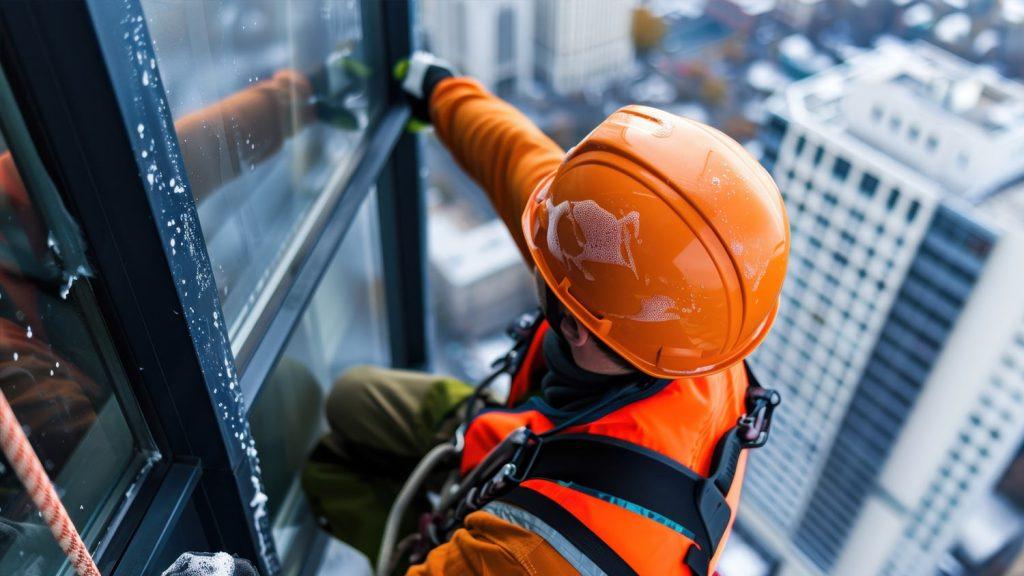
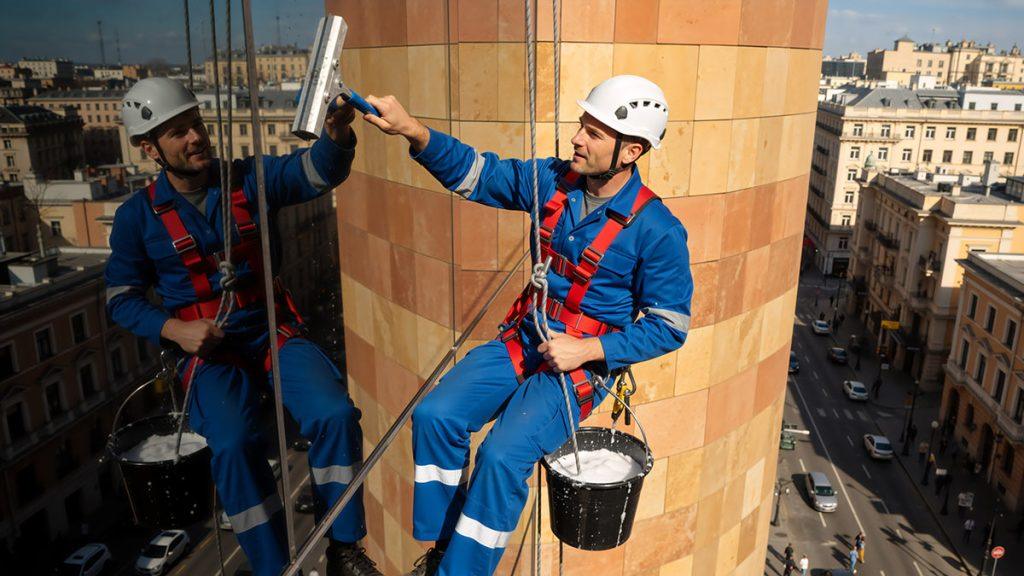
Rope access and abseiling are often the most efficient solutions for tall structures, but only when planned and executed by trained professionals following strict safety procedures.
2. Limited or Restricted Roof Space
Many modern buildings prioritise clean rooflines, plant screening, and architectural aesthetics over maintenance access. As a result, roof space is often:
-
Crowded with HVAC and plant equipment
-
Narrow or irregular in shape
-
Lacking clear walkways or safe zones
Restricted roof space makes it difficult to position equipment safely or establish effective access routes. Without proper planning, operatives may be forced into unsafe working positions, increasing the likelihood of incidents.
For window cleaning at height, limited roof space can significantly restrict safe anchor placement and rope management, requiring specialist assessment and access planning.
3. Fragile Roof Surfaces and Materials
Contemporary buildings frequently incorporate lightweight or fragile roofing materials such as:
-
Standing seam metal roofs
-
Composite panels
-
Green or blue roofs
-
Glazed roof sections
These materials are not designed to bear foot traffic without protection. Stepping directly onto fragile surfaces can result in serious falls, roof damage, and costly repairs.
Safe access over fragile surfaces requires specialist controls, such as designated walkways, temporary protection, or carefully managed rope access systems that minimise roof loading.
4. Lack of Designed-In Access Solutions
One of the most common issues across modern commercial buildings is the absence of permanent access systems.
In many cases, access for window cleaning and façade maintenance is treated as an afterthought during the design and construction phase. As a result, buildings are handed over without:
-
Suitable anchor points
-
Safe edge protection
-
Clearly defined access routes
This forces property managers into reactive, ad-hoc solutions, often involving temporary equipment or emergency works. These approaches are not only inefficient but can also expose duty holders to legal and safety risks under the Work at Height Regulations.
5. Inadequate or Non-Compliant Anchor Points
Even when anchor points exist, they are not always fit for purpose.
Common issues include:
-
Anchors that are poorly positioned
-
Insufficient load ratings
-
Lack of certification or testing records
-
Systems designed for occasional use, not regular cleaning
Improperly specified anchor points can make rope access inefficient, increase wear on equipment, and compromise safety. For cleaning operatives, this leads to awkward rope routes, excessive swing, and longer working times.
Regular inspection and proper documentation are essential to ensure anchor systems remain safe and legally compliant.
6. Complex Façade Geometry
Modern commercial buildings rarely have flat, uniform façades. Instead, they often feature:
-
Recessed glazing
-
Overhangs and cantilevers
-
Balconies and architectural fins
-
Mixed materials and angles
While visually impressive, complex façades make consistent window cleaning far more challenging. Some areas may be easy to reach, while others require specialist techniques or additional rigging considerations.
Without experienced rope access planning, these complexities can result in incomplete cleans, increased risk, or repeated call-outs to address missed areas.
7. Public and Occupied Environments
Commercial buildings are rarely empty. Offices, retail spaces, residential blocks, and mixed-use developments are often fully occupied during cleaning operations.
This introduces additional risks, including:
-
Dropped object hazards
-
Noise and disruption to tenants
-
Restricted working hours
-
Interaction with the public
High-level window cleaning must be carefully planned to protect people below, using exclusion zones, controlled work areas, and clear communication with building management.
Rope access has the advantage of being low-impact and quiet compared to scaffolding or large machinery, but it still requires meticulous site management.
8. Weather Exposure at Height
Wind, rain, and temperature fluctuations have a far greater impact on work at height than at ground level.
Modern buildings, especially tall or exposed structures, are subject to wind acceleration and turbulence around façades. These conditions can affect rope stability, operative comfort, and overall safety.
Professional access contractors monitor weather conditions closely and understand when work must be postponed. This level of judgement is essential to avoid unnecessary risk and ensure consistent service delivery.
9. Compliance and Legal Responsibilities
For property and block managers, access challenges are not just operational — they are legal.
Under UK health and safety legislation, duty holders must ensure that anyone working at height can do so safely. This includes providing suitable access arrangements, selecting competent contractors, and maintaining compliant systems.
Failure to address access challenges properly can result in:
-
Enforcement action
-
Prosecution
-
Increased insurance premiums
-
Reputational damage
Proactive planning and the use of specialist high-access contractors help demonstrate best-practice duty of care.
10. Balancing Cost, Safety, and Appearance
Finally, one of the biggest challenges is balancing budgets with safety and building presentation.
Poor access planning often leads to higher long-term costs through emergency works, inefficient cleaning, or repeated visits. Conversely, well-planned access solutions and professional rope access cleaning allow buildings to be maintained efficiently, safely, and consistently.
Clean windows are one of the most visible indicators of a well-managed property. Ensuring they can be cleaned safely and regularly protects both people and the building’s reputation.
Managing Access Challenges Effectively
Modern commercial buildings demand modern access solutions. Rope access window cleaning, when delivered by experienced professionals, offers a safe, efficient, and minimally disruptive way to overcome many of today’s access challenges.
By understanding the risks, planning ahead, and working with competent high-access specialists, property managers can maintain their buildings confidently — no matter how complex the architecture.